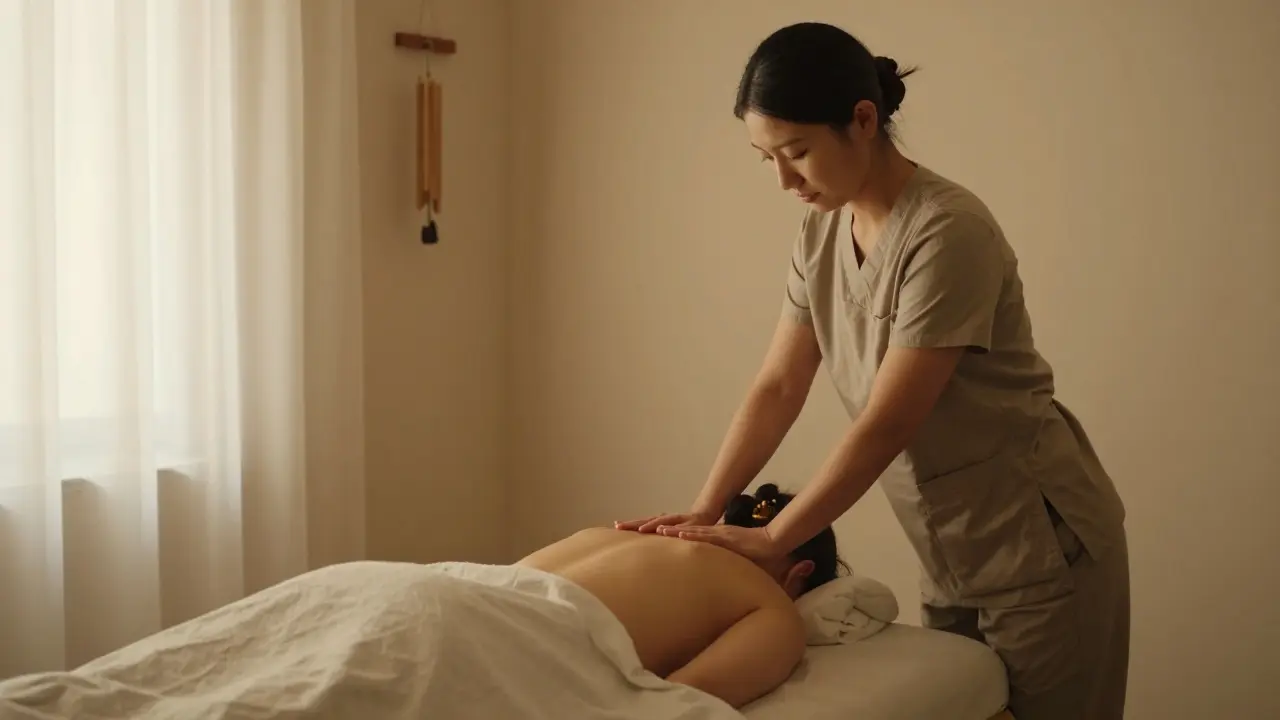
Feeling worn out? Your body’s telling you something. Maybe your shoulders are stuck in a knot, or your mind won’t shut off no matter how many hours you sleep. A good relax massage isn’t just a luxury-it’s a reset button for your nervous system. But finding the right therapist? That’s not as simple as picking the one with the cheapest price or the prettiest Instagram feed.
What Makes a Relax Massage Therapist Different
Not all massage therapists are the same. Some focus on athletic recovery. Others specialize in prenatal care. But a true relax massage therapist? They know how to quiet your nervous system. Their hands don’t just move muscle-they talk to your brain. They use slow, rhythmic strokes. Not deep pressure. Not cracking joints. Just gentle, consistent flow.
Think of it like tuning a guitar. Too tight, and it snaps. Too loose, and it hums wrong. A skilled relax therapist finds your body’s sweet spot. They don’t push through tension. They invite it to soften. That’s why you leave feeling lighter, not bruised.
Where to Look (And What to Avoid)
You might think spas are the obvious place to start. But here’s the truth: big luxury spas often hire people on contract. They’re paid per session, not trained in therapeutic rhythm. You might get a nice room, scented candles, and a fluffy robe-but the massage? It’s rushed. Five minutes in, they’re already thinking about the next client.
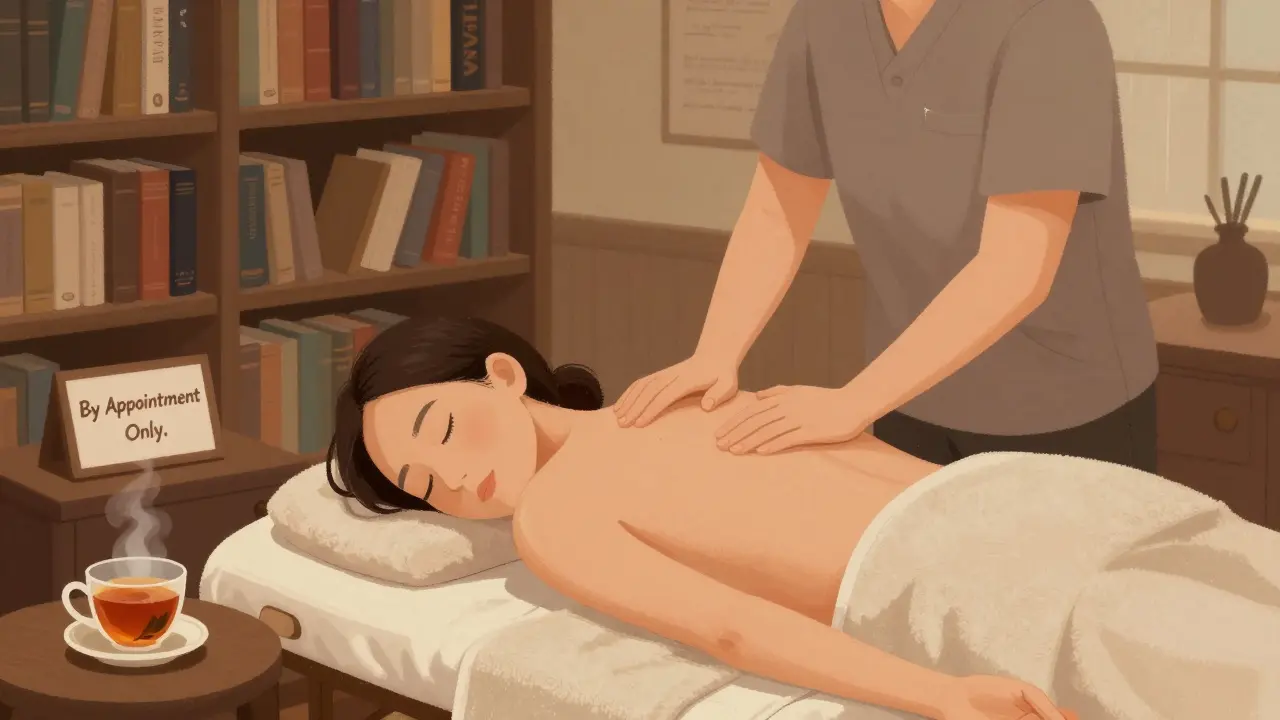
Instead, look for independent practitioners. Not the ones with flashy websites. The ones with quiet studios. Maybe they work out of a converted loft, a small clinic above a bookstore, or even a home office with soft lighting. These places don’t advertise on Google Ads. They survive because clients keep coming back.
Check reviews-but not the five-star ones. Look for the ones that say things like: “They didn’t rush me.” “I fell asleep and didn’t wake up until they turned off the music.” “I didn’t feel like I was being sold a package.” Those are the real signals.
What to Ask Before Booking
You wouldn’t hire a personal trainer without asking about their experience. Same goes here. Don’t be shy. Ask these three things:
- How long have you been doing relax-focused massage? Not just “how long have you been a therapist?” Look for at least three years of intentional work in stress-relief techniques.
- Do you use oil or lotion? And what kind? A good relax therapist uses natural oils-jojoba, sweet almond, or grapeseed. Avoid places that use cheap, synthetic lotions. They can clog pores and leave a greasy residue that makes you feel worse.
- Can you adjust pressure without me having to say anything? A great therapist reads your breathing. If your breath gets shallow, they lighten up. If you sigh, they deepen the stroke. It’s not about following a script. It’s about listening.
If they hesitate or give vague answers, walk away. You’re not just paying for touch. You’re paying for presence.
What to Expect During the Session
Here’s what a real relax massage looks like:
- It starts with quiet. No music blasting. Just ambient sound-maybe a single chime, a soft wind recording, or nothing at all.
- They don’t ask you to talk. No “how’s your day going?” or “where do you hurt?” That’s for medical massage. This is about disengaging.
- The pressure is never intense. You should feel warmth, not pain. If your jaw clenches, they’re going too hard.
- They work from head to toe, but slowly. Each area gets at least five minutes. No skipping legs or rushing the back.
- The session ends with silence. No rushing you out. They might hand you a warm towel or a glass of water. But they won’t say, “Next client’s in five.”
Afterward, you shouldn’t feel like you need to nap immediately. You should feel calm, clear, and slightly floating. If you feel dizzy or sore, something went wrong.
Red Flags to Watch For
Some signs aren’t obvious until you’ve been there. Here’s what to watch:
- They offer “couple’s massage” packages. Relax massage is deeply personal. If they’re pushing group sessions, they’re more interested in volume than quality.
- They sell supplements or oils. A therapist who’s trying to upsell you isn’t focused on your well-being. They’re focused on their commission.
- The room smells like chemicals. Lavender is fine. Industrial disinfectant? Not okay. You’re lying on fabric that touches your skin. It should smell clean, not like a hospital.
- They don’t wash their hands before starting. This isn’t negotiable. No exceptions.
How Often Should You Go?
Once a month is the baseline for most people. But if you’re under high stress-working long hours, dealing with grief, recovering from illness-biweekly works better. Your body doesn’t heal in one session. It needs consistency.
Think of it like watering a plant. One deep soak won’t keep it alive if you forget for three weeks. Small, regular care makes the biggest difference.
What If You Can’t Afford It?
Massage doesn’t have to cost $120 an hour. Many therapists offer sliding scales. Ask. Some work out of community centers. Others host donation-based sessions once a month. There are also training schools where students give massages under supervision-for as little as $25. The technique might be a little less polished, but the intention? Often deeper.
And if money’s tight? Try self-massage. Use a foam roller on your back. Rub your temples with your thumbs. Warm a rice sock in the microwave and lay it across your neck. You don’t need a professional to start healing. You just need to begin.
Why This Matters More Than You Think
Stress doesn’t just live in your mind. It lives in your fascia, your muscles, your breath. Chronic tension turns into pain. Pain turns into fatigue. Fatigue turns into burnout. And burnout doesn’t fix itself with more coffee.
A good relax massage doesn’t just feel nice. It lowers cortisol. It increases serotonin. It tells your body, “You’re safe now.” That’s not magic. It’s biology.
When you find the right therapist, you’re not just paying for a service. You’re investing in a quiet space where your body can finally let go. And that? That’s worth more than any spa package.
How do I know if a massage therapist is truly trained in relax massage?
Look for certifications in Swedish massage, myofascial release, or somatic therapy. These are techniques built for relaxation, not deep tissue correction. Ask if they’ve trained under a mentor who specializes in stress reduction. Avoid therapists who only list “licensed massage therapist” without mentioning their focus area.
Can I ask for a female or male therapist?
Absolutely. Your comfort matters more than their gender. A good therapist will respect your preference without judgment. If they make you feel awkward for asking, that’s a red flag. Trust your instincts-this is about safety, not politics.
Should I tip a massage therapist?
Tipping isn’t required, but it’s appreciated. In independent studios, therapists often keep 70% or more of the fee. If you felt deeply cared for, a 10-15% tip is a kind way to say thanks. If you’re on a tight budget, a heartfelt note means just as much.
Is it weird to fall asleep during a massage?
Not at all. In fact, it’s one of the best signs. If you drift off, it means your nervous system finally trusted the environment. A skilled therapist will adjust their touch to keep you in that calm zone-even if you snore. Don’t apologize. It’s a compliment to their work.
What’s the difference between relax massage and deep tissue?
Relax massage is about calming the nervous system. It uses light to medium pressure, slow strokes, and rhythmic flow. Deep tissue targets chronic muscle knots with firm pressure. It’s therapeutic, not relaxing. If you’re stressed, deep tissue can make you feel worse. Save it for injuries or tightness from sports-not daily anxiety.