
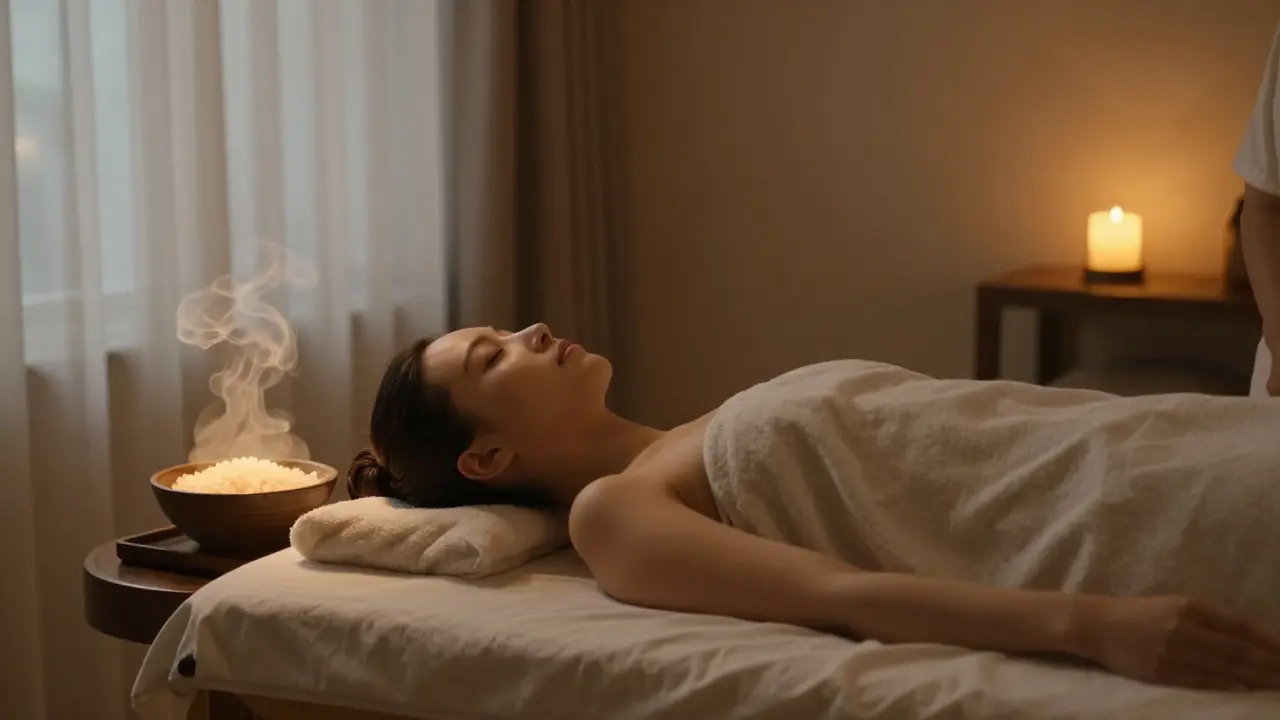
When was the last time you truly unwound? Not just sat still, but actually let your muscles loosen, your breathing deepen, and your mind go quiet? If it’s been weeks-or worse, months-you’re not alone. Most people wait until they’re stiff, sore, or on the verge of burnout before they think about massage. But relaxation massage isn’t a luxury for crisis mode. It’s a tool for staying balanced.
What Exactly Is a Relaxation Massage?
A relaxation massage, sometimes called Swedish massage, uses long, flowing strokes, gentle kneading, and light pressure to calm the nervous system. It’s not about digging into knots or fixing injuries. That’s therapeutic or deep tissue work. This is about signaling to your body: you’re safe now. The goal is to lower cortisol, slow your heart rate, and turn off the fight-or-flight mode that most of us live in.
Think of it like hitting pause on a video that’s been playing on loop for days. Your shoulders aren’t just tight-they’re holding onto stress from emails, traffic, deadlines, or family demands. A good relaxation massage doesn’t erase those things, but it gives your body a chance to reset.
How Often Should You Get One?
There’s no one-size-fits-all answer, but most people benefit from a relaxation massage every 2 to 4 weeks. That’s the sweet spot for keeping stress levels low without overspending or overstimulating your system.
If you’re going through a high-stress period-like a big project at work, a move, or caring for someone sick-aim for once a week for 3 to 4 weeks. Then drop back to every 3 weeks. Think of it like refueling your car. You don’t wait until the tank’s empty. You top up before you run dry.
On the other end, if you’re generally calm, sleep well, and move regularly, once a month might be enough. You’re not ignoring stress-you’re managing it before it builds up.
What Happens If You Go Too Often?
More isn’t always better. Getting a massage every day for weeks on end can actually make your body less responsive. Your muscles get used to the pressure, and your nervous system stops reacting as strongly. You might start feeling like it’s just another appointment-not a reset.
Also, your body needs time to process the effects. After a massage, your circulation increases, toxins are released, and your nervous system shifts from alert to calm. That transition takes 24 to 48 hours. If you book another one too soon, you’re interrupting the recovery cycle.
There’s also the cost factor. A 60-minute relaxation massage in the UK averages £55 to £85. Doing it weekly adds up to over £3,000 a year. That’s not sustainable for most people. The goal is effectiveness, not frequency.
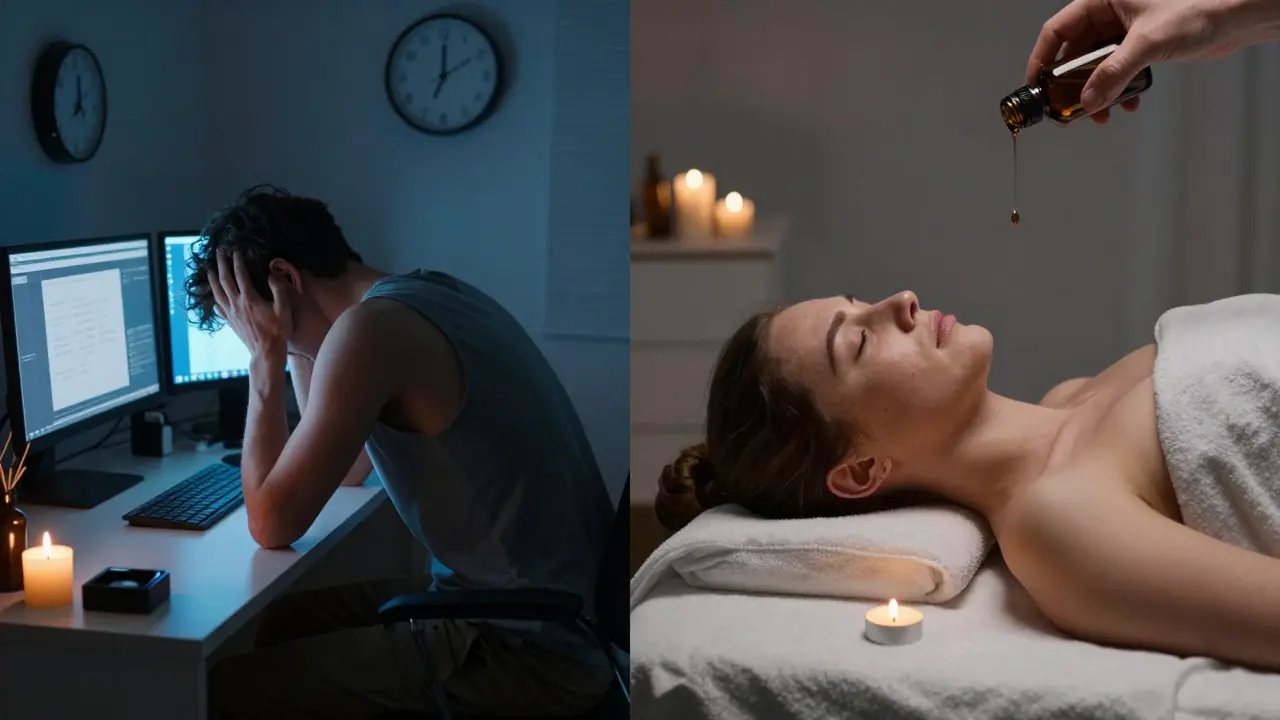
Signs You Need One Sooner
You don’t need to wait for a scheduled appointment. Your body will tell you when it’s time. Watch for these signals:
- Your neck or shoulders feel permanently tight, even after stretching
- You’re having trouble falling asleep or staying asleep
- You’re snapping at people over small things
- You feel drained even after a full night’s rest
- You’re holding your breath without realizing it
These aren’t just ‘bad days.’ They’re signs your nervous system is stuck in overdrive. A massage can help flip the switch back to rest-and-digest mode.
What If You Can’t Afford Regular Sessions?
You don’t need a professional every time. Self-care matters too. Try these low-cost alternatives:
- Use a foam roller for 10 minutes after work-focus on your back, thighs, and calves
- Try a warm bath with Epsom salts and lavender oil twice a week
- Do a 5-minute breathing exercise before bed: inhale for 4 counts, hold for 4, exhale for 6
- Ask a partner or friend for a 10-minute shoulder rub
These won’t replace a professional massage, but they’ll help keep tension from piling up between sessions.
How to Make the Most of Your Session
Getting a massage is only half the battle. What you do before and after matters just as much.
Before: Don’t eat a heavy meal right before. Drink a glass of water. Tell your therapist if you’re feeling particularly tense in one area. You’re not being pushy-you’re helping them help you.
During: Breathe. Many people hold their breath without realizing it. Try to match your breath to the rhythm of the strokes. Let your jaw go loose. Let your arms sink into the table.
After: Drink water. It helps flush out the metabolic waste released during the massage. Avoid caffeine or alcohol for the next few hours. Give yourself 20 minutes to sit quietly-no phone, no screens. Just breathe. You’ll notice the effects last longer.
Who Should Avoid Relaxation Massage?
Most people can safely get a relaxation massage. But if you have:
- An active infection or fever
- Recent surgery or open wounds
- Severe osteoporosis
- Deep vein thrombosis (DVT)
- Uncontrolled high blood pressure
-you should check with your doctor first. A gentle massage might still be safe, but you need to be clear about your health history.
Real Results: What People Actually Feel
One client I worked with in Manchester came in every Monday for six weeks during a brutal work quarter. She said, “I didn’t feel like I was getting better-I felt like I was just keeping up.” After the sixth session, she slept through the night for the first time in months. She didn’t notice it until it happened.
Another man, 58, started getting monthly massages after his wife passed away. He said, “I didn’t know I was holding onto grief in my shoulders until it was gone.” He didn’t cry during the session. He just felt lighter afterward.
These aren’t magic fixes. But they’re real. And they stick around longer than you think.
Final Thought: It’s Not a Treat. It’s a Tool.
You brush your teeth every day because you know it prevents bigger problems. You take your vitamins because you know your body needs support. A relaxation massage is the same. It’s not a reward for being good. It’s maintenance for your nervous system.
You don’t wait until your car’s engine is smoking to change the oil. Don’t wait until your body is screaming to give it rest. Schedule it like you would a doctor’s appointment. Because your body deserves that kind of care.
How often should I get a relaxation massage for stress relief?
For most people, every 2 to 4 weeks is ideal. If you’re under high stress, weekly for a few weeks can help reset your system. Once stress levels drop, return to every 3 to 4 weeks. The goal is consistency, not intensity.
Can I get a massage too often?
Yes. Getting a massage daily or multiple times a week for long periods can make your body less responsive. Your nervous system adapts, and the calming effect weakens. Stick to 1-2 times a week max during high-stress phases, then scale back.
Is a relaxation massage the same as a deep tissue massage?
No. Relaxation massage uses light to moderate pressure and long strokes to calm the nervous system. Deep tissue massage uses stronger pressure to target chronic muscle tension and adhesions. They serve different purposes-one is for rest, the other for repair.
What should I do after a relaxation massage?
Drink water to help flush out released toxins. Avoid caffeine and alcohol for a few hours. Take 15-20 minutes to sit quietly without screens. This lets your body fully shift into rest mode and makes the benefits last longer.
Can I do relaxation massage at home?
You can’t fully replicate a professional session, but you can support it. Use a foam roller, take warm baths with Epsom salts, practice slow breathing, or ask someone for a gentle shoulder rub. These help between professional sessions and reduce tension buildup.




It’s funny how we treat our bodies like machines that don’t need maintenance until they break. We change the oil in our cars every 5,000 miles but wait until we’re crying in the shower because our shoulders feel like concrete. Massage isn’t a treat-it’s a biological reset button. Your nervous system doesn’t care about your to-do list. It just needs to know it’s safe. And if you’re not giving it that, you’re running on fumes while pretending you’re fine.
It’s not about spending money. It’s about honoring the fact that you’re a living organism, not a productivity app. You wouldn’t ignore a check engine light. Why ignore the one that’s flashing in your spine?
Oh wow, so now we’re all supposed to get massages like it’s a subscription box? Next they’ll tell us to book a ‘soul alignment’ every Tuesday and pay extra for lavender-scented candles. I’m sorry, but if you’re that stressed you need a £70 rubdown just to breathe, maybe stop working 80-hour weeks and ask your boss for a break. Or, gasp-learn to say no.
Also, ‘relaxation massage’? Sounds like a spa ad for people who think ‘self-care’ means buying things. I’ll take a 10-minute walk and a nap over a £55 shoulder squeeze any day.
Let’s be real-massage is just a fancy way of paying someone to touch you while you lie there pretending you’re not thinking about your ex, your taxes, and that one email you still haven’t replied to.
It’s not the massage that’s healing you. It’s the 60 minutes you’re not scrolling, not working, not parenting, not performing. The massage is just the excuse. The real therapy is the silence. And yeah, maybe you could get that by sitting in a bathtub with a candle and a terrible podcast. But hey, if you need someone else’s hands to tell you it’s okay to stop… who am I to judge?
Weekly massages? For what? To keep you from crying at your desk? You’re not broken. You’re just lazy. If you were actually managing stress, you’d be meditating, sleeping, moving, or-get this-talking to someone. Not paying strangers to knead your traps.
And ‘toxins’? Please. That’s not a thing. Massage doesn’t flush ‘toxins.’ It increases blood flow. Big whoop. You think drinking water after a massage is magic? Nah. You’re just hydrating. Like you should do every day. This whole thing is capitalism selling you a band-aid for a broken system.
There’s so much truth here-and I want to gently affirm it. If you’re reading this and thinking, ‘I can’t afford that,’ I hear you. But you don’t need a spa. You need consistency. Even 10 minutes of deep breathing before bed, or rolling out your calves with a tennis ball while watching TV, counts. Your nervous system doesn’t need perfection-it needs presence.
And if you’re someone who feels guilty for taking time for yourself? Please know this: you are not being selfish. You’re being sustainable. You can’t pour from an empty cup. Not even for your kids, your job, your partner. Not even for your future self.
Start small. One breath. One stretch. One quiet moment. That’s the real massage. The professional one? That’s just the cherry on top.
You’re allowed to rest. You’re allowed to heal. And you don’t need permission from anyone-not even your inbox.
As a Canadian who’s lived in both Vancouver and Montreal, I’ve seen this play out in two cultures: the ‘push through it’ Americans and the ‘let’s nap and eat poutine’ Canadians. Guess who’s healthier?
Massage isn’t luxury. It’s cultural intelligence. In Quebec, they know that stress lives in the body. In Texas? They think ‘toughing it out’ is a virtue. But your body doesn’t care about your resume. It cares about your breath. Your pulse. Your ability to unclench.
And if you can’t afford a masseuse? Then get a friend. A sibling. A partner. A dog. Touch is medicine. It’s not new-age. It’s biological. We’re mammals. We evolved to be held. Don’t let capitalism convince you that healing has to cost £85.
You know what’s wild? I used to think massage was for people who had too much money and too little purpose, but then I started noticing how my shoulders would rise up to my ears every time I sat at my desk for more than an hour, and how my jaw would clench so hard I’d wake up with headaches, and how I’d forget what my own voice sounded like because I hadn’t spoken above a whisper in three days, and then one day I just went to this little place down the street that charged thirty bucks and the therapist asked me if I wanted the ‘chill mode’ or the ‘deep sigh’ option and I said ‘both’ and she laughed and I cried and I didn’t even realize I was crying until she handed me a tissue and said ‘you’re not broken, you’re just tired’ and now I go every three weeks and I don’t even think about it anymore, it’s just part of my routine like brushing my teeth or not checking my phone in the first ten minutes after I wake up, and honestly? It’s the only thing that makes me feel like I’m still human and not just a collection of nerves and caffeine and unresolved trauma wrapped in a hoodie.
Also, I drink water after now. I didn’t used to. But now I do. Because I learned that my body doesn’t lie. It just gets quieter when you ignore it.
‘Toxins’? No. ‘Metabolic waste’? Maybe. But you’re not ‘flushing’ anything. And ‘rest-and-digest mode’? That’s the parasympathetic nervous system. Stop using buzzwords like they’re magic spells. Also, ‘don’t eat a heavy meal’-duh. Who does that? And ‘avoid caffeine’? So… don’t drink coffee? Wow. Groundbreaking.
Also, ‘you deserve care’? Cute. But if you’re broke, stop pretending this is essential. Go for a walk. Breathe. Sleep. That’s free. And it works.